
Defence and security
AI and software engineering for UK defence and national security, delivered by cleared engineers in Newcastle upon Tyne.
Talk to our defence teamDefence and security
What we do
Production grade software built for real operations
Most of our defence work falls under four capabilities.
Detect and track
Small or partly hidden objects in cluttered, changing scenes, from conventional and novel sensors.
Understand and decide
High-volume, imperfect data turned into insight an operator can act on and explain.
Operate at the edge
Systems that keep working on little power, with no connectivity or satellite navigation.
Data where there is none
Physics-based synthetic data for threats too rare or dangerous to record.
We take that work from first advice to a supported, operational system.
- Technology advice
- Independent assessment of what will work in your environment before you invest.
- Hardening prototypes
- Promising prototypes, ours or someone else's, turned into secure, tested software.
- Software, data and AI engineering
- Applications, data platforms and models built to your assurance requirements and monitored once live.
- Systems integration
- Connected to what you already run, whether that is cloud, on premises, air-gapped or edge.
- AI-assisted engineering
- Helping your engineers adopt AI coding assistants, with approved tools, automated checks and a named person accountable for every change.
Our work
Recent projects
Maritime
Explainable maritime intelligence
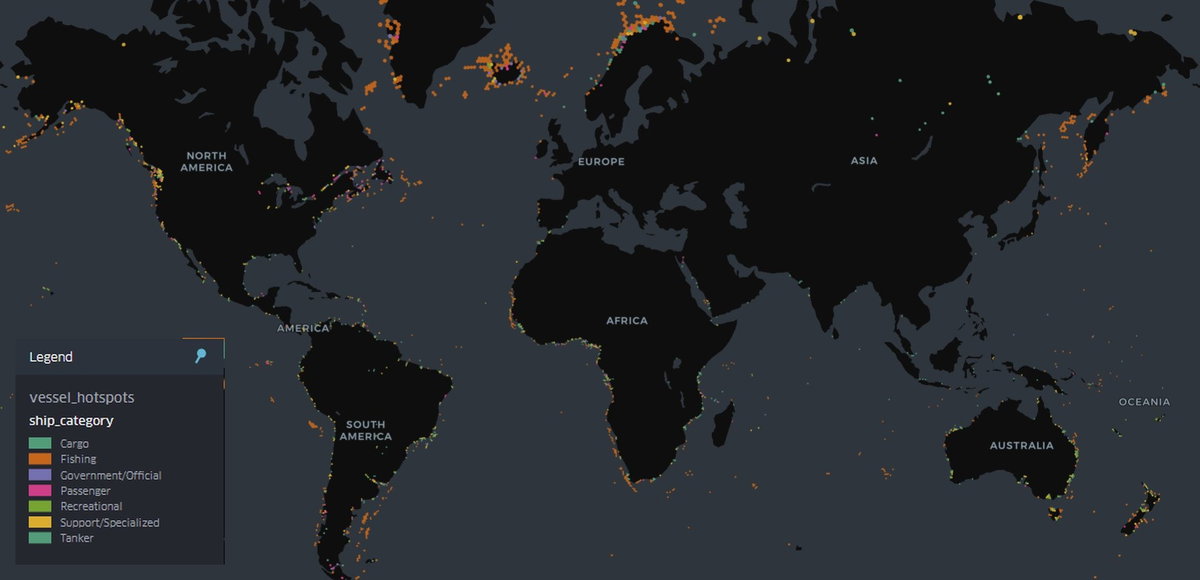
Vessel tracking feeds arrive as position reports with gaps and unreliable identities. Our pipeline rebuilds each vessel's voyages, port calls and anchorages, and attaches an explanation to every prediction and anomaly it flags, so an analyst can see why a vessel was marked.
Map: vessel activity reconstructed by our pipeline.
Base and perimeter security
3D awareness from one camera
When a vehicle passes in front of an intruder, a fixed camera loses them. We reconstruct a live 3D scene from a single standard video feed, with no LiDAR or manual calibration, so the tracker knows what is hidden and where.
Disconnected environments
Offline speech transcription for medics
A medic treating a casualty can dictate the handover record instead of stopping to write it. Transcription runs fully offline on low-power hardware, is tuned to military and medical terms, and outputs a structured report.
Alternative navigation
Navigation without satellites
Uncrewed systems still need to know where they are when satellite navigation is denied. Our visual odometry estimates position from the onboard camera in real time, fused with altimeter and inertial data to fix scale and limit drift, on embedded hardware.
Test and evaluation
Synthetic data for scarce threats
Real sensor data of threats, such as X-ray imagery of improvised explosive devices, is hard to obtain and can be hazardous to collect. We build digital 3D scenes and simulate the sensor with physics-based methods. The result is labelled data that augments real datasets for training and testing machine learning models.
Who we are
Engineers who have worked inside defence
Our senior engineers have spent their careers in the UK's defence and national security community. They have delivered sonar and signal processing software into defence research and led AI teams inside defence technology companies. One has advised government on AI; another designed a platform for sharing sensitive intelligence. Others hold patents and published research in adversarial AI.
We hire every grade, from graduate to principal, against the same high bar and don't lower it to fill a role. The wider team includes doctorates in particle physics, theoretical chemistry and neuromorphic computing, and engineers who came from games studios, sonar, photonics and consumer electronics. Between them they write C and C++ for microcontrollers, Python for fine-tuned language models, and Rust where memory safety matters.
They also collaborate with our financial services clients, which keeps their engineering current outside defence.
How we deliver
Security and AI you can account for
Secure by Design
- We follow the UK Government's Secure by Design principles and work to each contract's Security Aspects Letter.
- Only BPSS or SC cleared staff carry out the work.
- Client material is never used to train models or shared with another client.
Responsible AI
- We use approved AI tools only.
- AI-assisted code gets the same tests and independent human review as any other code before it ships.
- The systems we build show operators how an output was reached, so they can question it.
Working with us
Two ways to engage
Augmentation
Cleared engineers join your team to fill a skills gap or add capacity, and work to your processes.
Full consultancy
We own a defined scope from requirements to working solution, without drawing on your people to manage delivery.
Either way, engineers work at your premises when classified systems call for it, from our Newcastle base when they don't, or a mix that changes with each phase of the programme.
In the North East
Growing cleared engineers where they are needed
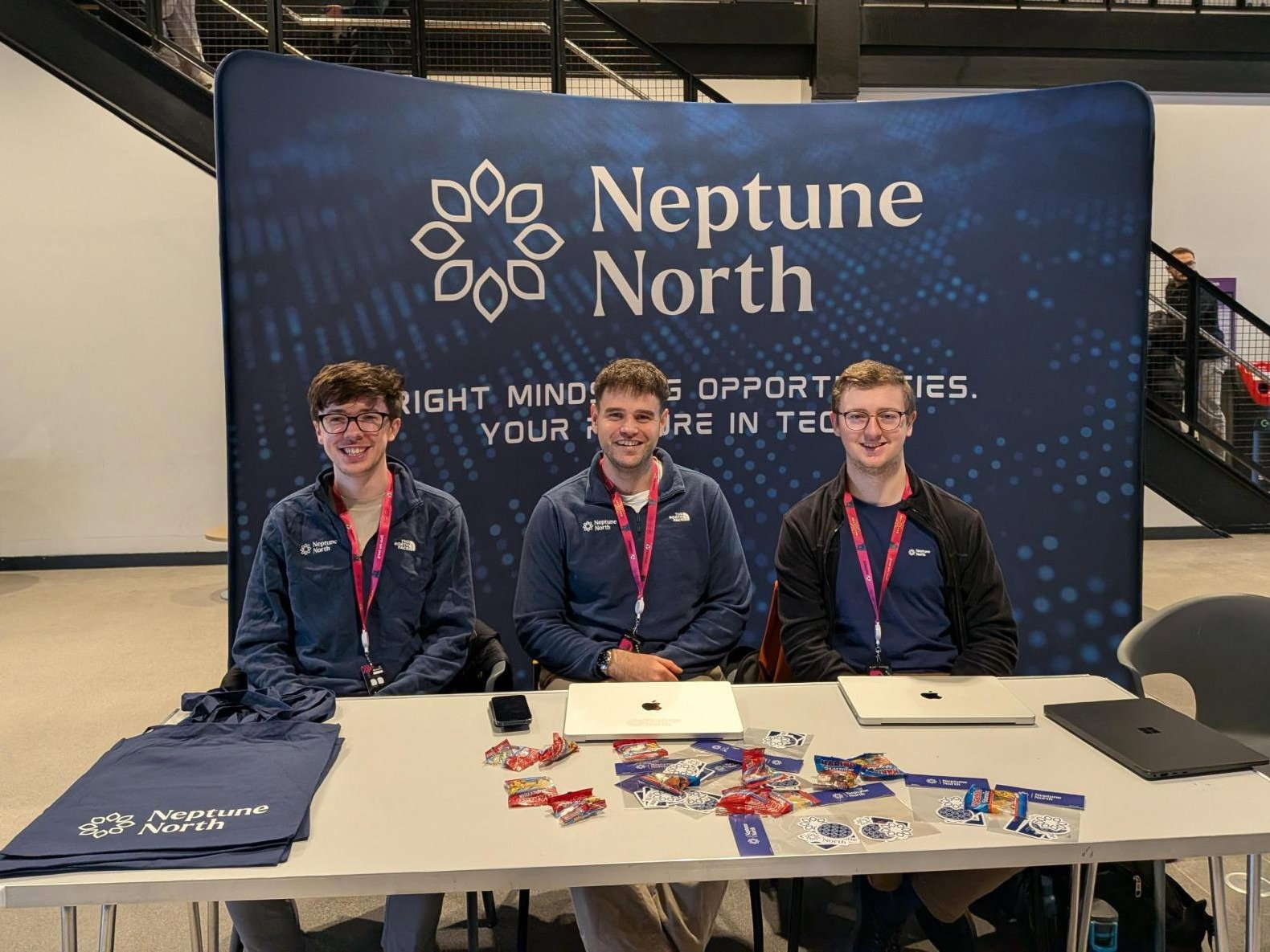
Cleared software engineering is a recognised national skills shortage, and the North East has long lost its engineering graduates to other regions. We recruit graduates and degree apprentices from the region's universities and put them on live defence programmes beside our senior engineers. We also run outreach in schools across the region.
Credentials
Accreditations and memberships


Discuss a defence challenge with us
Tell us the problem and we'll say whether we can help.